AI for Creators · Guide
Audit an AI Transcript Before a Quote Reaches Publication
Treat automated speech text as a searchable draft, then verify names, speakers, numbers, and context against the recording.
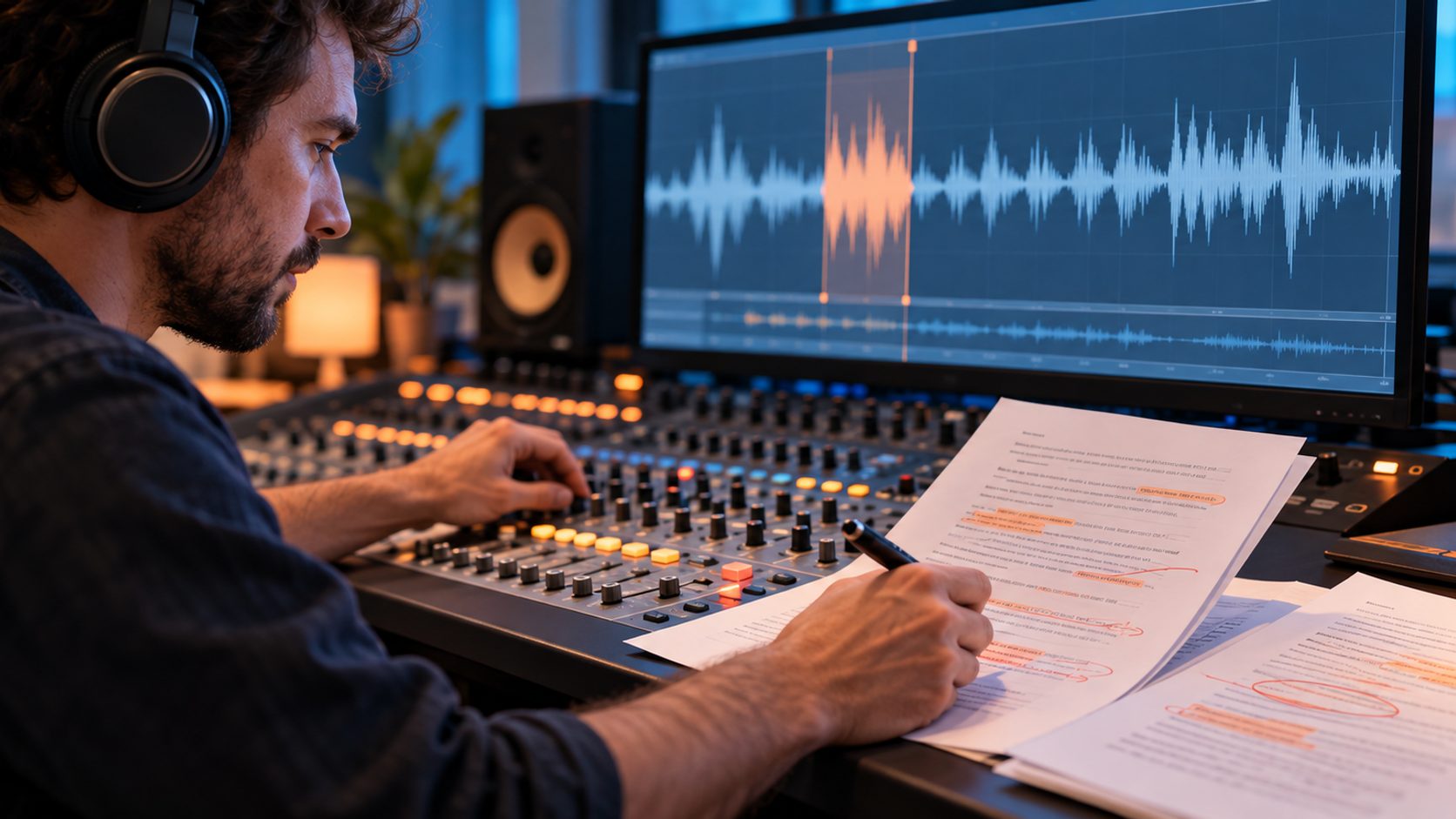
Use automatic transcription to locate passages, not to certify quotations. Check the selected passage against the original recording, confirm speaker and wording, preserve meaningful context, review names and numbers, and record the edit decisions. A published transcript also needs the non-speech information required for understanding.
Treat the first transcript as a navigation aid
Automatic transcription is valuable because it makes a long recording searchable. That does not make every sentence publication-ready. Accents, overlapping speech, unfamiliar names, quiet words, technical terms, and poor microphones can change a sentence. The risk rises when a short quote will stand alone as evidence for a claim. Keep the original recording available to the editor who approves the text, with a timestamp for each proposed quotation. If the recording cannot be heard clearly, mark the passage uncertain rather than silently choosing the most plausible phrase. Separate a rough working transcript from an approved public transcript. The first supports discovery; the second represents what a person said and therefore needs direct checking. A speaker's reputation can be affected by one lost negation or a misassigned opinion. This is an editorial accuracy issue, not merely a spelling issue.
Check high-impact words first
Listen to names, figures, dates, negations, conditions, and qualifiers before polishing punctuation. Did the speaker say can or cannot, some or all, estimated or measured? Was a number a percentage, a count, or a range? Check proper nouns against an authoritative spelling source and the speaker's own introduction where possible. If an unfamiliar term remains unclear, ask the speaker or a subject expert rather than manufacturing a likely word. Preserve the original audio section as the reference for any correction. A transcript can look grammatically odd because people speak in fragments; editing it into elegant prose can change meaning. Define whether the publication uses verbatim quotation, lightly cleaned speech, or a paraphrase, and apply that standard consistently. Do not put a rewritten sentence inside quotation marks because the automated transcript made it convenient.
Verify who said it and why
Multi-speaker audio creates a second failure mode: the words may be correct but assigned to the wrong person. Follow the conversation before and after the target passage, especially around interruptions and short acknowledgments. Mark uncertain speaker turns for review. A quote that says yes may answer a different question from the one a summary implies. Listen to the question and the speaker's full response before using a fragment in a headline or social post. When the speaker corrects themselves later, the correction belongs in the editorial interpretation. An AI summary may collapse disagreement into a neat consensus; the full recording can show a caveat or unresolved objection. Capture that context in notes so an editor can explain why a sentence is used. Attribution is an accountable editorial decision, not a formatting step handled by the transcript service.
Make an accessible public transcript
A transcript is also an access route for people who cannot hear the recording or prefer text. W3C WAI describes basic transcripts as including speech and non-speech audio information needed to understand the content. Identify speakers clearly and include a significant sound when it changes meaning, such as a demonstration alarm or audience reaction the narration refers to. For video, a descriptive transcript may also need relevant visual information. Avoid dumping raw speech-to-text with missing speaker labels and calling it accessible. Correct jargon and names, structure the text for scanning, and link it near the media player. Captions have their own timing and synchronization needs; a corrected transcript does not automatically produce good captions. Review both artifacts in the form people will use. If an embedded video changes, recheck the text and captions against the final cut.
Record the editorial transformation
Keep timestamps, correction notes, and a record of substantive edits. Routine punctuation cleanup may not need a detailed log, but a changed word, omitted clause, or translation decision should be explainable. If the speaker approves a quote, record the exact version approved and what that approval covers. Do not treat approval as evidence for a factual claim outside the speaker's knowledge. If a section is inaudible, use a transparent marker or omit it rather than filling from context. Store the source audio under the appropriate access rules, especially for private interviews. A public transcript may require redaction of personal details that should not be published even if they are audible in the source. The publication decision and the transcription correction are related but distinct.
Use a two-pass review for publication
In pass one, compare the selected quotes with the recording and fix speaker, words, numbers, and context. In pass two, read the article or show notes as a reader will encounter them. Does the surrounding paragraph overstate the quote? Does a headline turn a tentative observation into a promise? Does the transcript still correspond to the edited audio file? A second editor can review high-impact passages while routine episodes use a proportional spot check. Build the check into the normal production schedule so it does not become a last-minute scramble after layout is complete. If a quote fails verification, replace it with a verified passage, paraphrase with clear attribution, or remove it. A fluent generated passage is never a reason to keep a quote the recording does not support.
Keep correction possible after release
Even a reviewed transcript can need a later correction when a speaker identifies a name error or an editor finds an overlooked phrase. Keep the source timestamp and published version so the team can assess the issue quickly. Correct the transcript, captions, article quotation, and any reused clip that contains the error. Where the change is material, use the site's normal correction practice so readers can understand what changed. If a correction affects the argument of the article, review the conclusion as well as the sentence. This lifecycle is easier when the transcript and article are linked by a stable recording reference. It is harder when an AI-generated summary is copied into multiple outputs without a trace to the source. Make traceability part of the publishing package, then move on; a single verified version is better than multiple inconsistent drafts.
Check repurposed clips as independent publications
A quote that was accurate in a full interview can mislead when cut into a short clip. Listen to the surrounding exchange and review the on-screen caption against the final edit. If a speaker says a finding applies only to one pilot, keep that condition audible or visible. Verify the title, description, and social caption too; they may be written from an early transcript version. For sensitive material, route the final clip through the same source and attribution review as the article. Preserve the exact published version and source timestamp so a later correction can reach every format.
Give uncertain audio a visible status
When a passage cannot be verified, label it uncertain in the working transcript and prevent it from entering a quote bank. The status should travel with the timestamp so another editor does not treat the fluent draft as approved. If the passage is essential, seek a better recording or direct clarification. If it is not essential, omit it. This simple state prevents a guessed word from becoming a repeated public quotation.
Sources and update note
Follow the linked official source before a product, price, plan, or policy decision.