
A guide
A Beginner’s Guide to Better AI Image Prompts
A prompt is a visual brief: define the job, the subject, the relationships, and the constraints before you ask for variations.
Read the guide →Decision desk
Practical editorial and production guides for creative work.
A guide
A prompt is a visual brief: define the job, the subject, the relationships, and the constraints before you ask for variations.
Read the guide →
A guide
Give AI a small, evidence-based voice system: audience relationship, useful tensions, examples, exclusions, and a human review step.
Read the guide →
A guide
A useful video brief decides the audience, beat, proof, and edit before a generator creates options.
Read the guide →
A guide
Use AI for bounded drafting work, then put the human point of view, evidence, and final editorial judgment back in charge.
Read the guide →
A guide
Use AI to organize claims and gaps, then let traceable sources and accountable editors decide what remains.
Read the guide →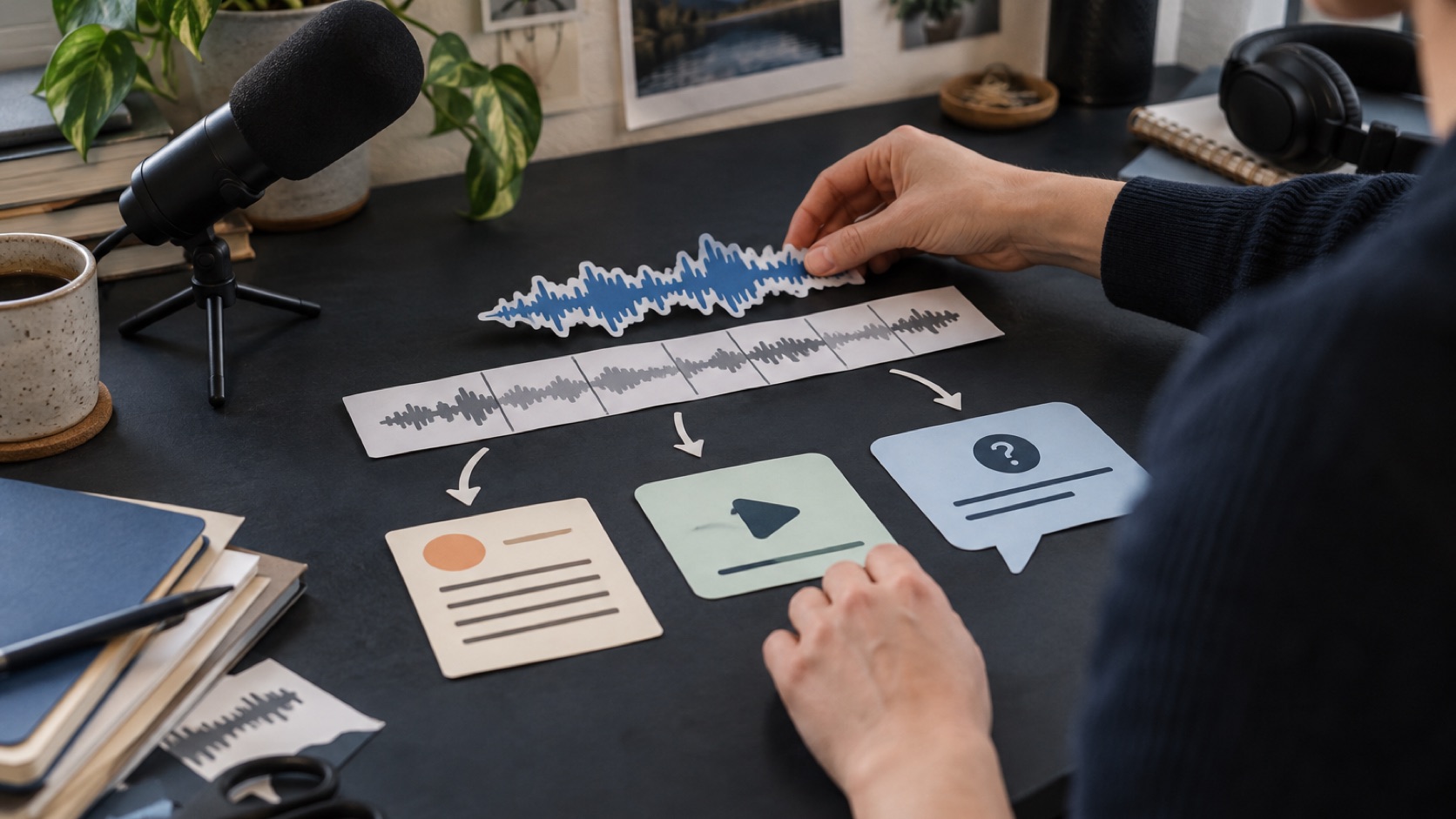
A guide
Repurpose an episode by extracting its real ideas, assigning each one a reader job, and editing every format for its own context.
Read the guide →
B guide
Build a newsletter around a repeatable reader promise, a small source habit, and a review rhythm you can keep on a busy week.
Read the guide →
B guide
Use mood words to begin a brief, then translate them into timing, instrumentation, energy, and a reviewable role in the final edit.
Read the guide →
B guide
A useful case study shows the brief, the decisions, the evidence, and the human responsibility behind an AI-assisted result.
Read the guide →
B guide
Use AI to assist a clear presentation argument, then test each slide for one job, readable hierarchy, and an honest connection to evidence.
Read the guide →
B guide
Build a small social plan from three defensible ideas, then vary the reader question and format without repeating claims or manufacturing volume.
Read the guide →
B guide
Use AI image tools to explore a campaign storyboard after the message, audience, sequence, constraints, and approval rules are already clear.
Read the guide →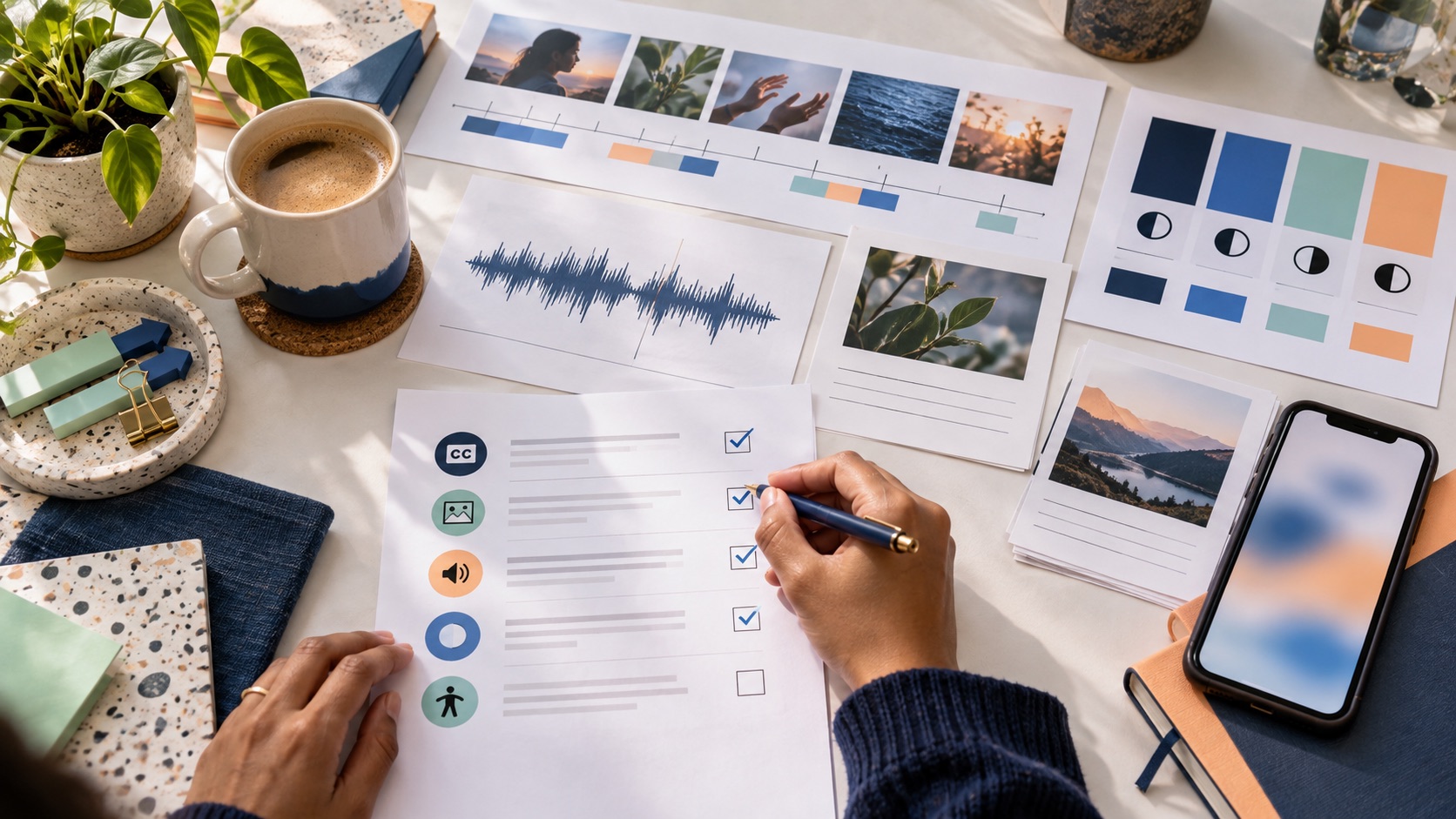
B guide
AI can speed up drafts for captions, descriptions, and checks—but accessibility still depends on context, intent, and final human review.
Read the guide →
B guide
A useful AI disclosure answers the reader’s practical question: what was made or materially changed, why it matters here, and what human review still occurred.
Read the guide →
B guide
Trust in synthetic media comes from a chain of evidence, clear context, and human verification—not from a single label, file property, or confident-looking clip.
Read the guide →How this desk works
Plan the beat, reserve space for meaning, then review the delivered format for captions, alternatives, and controls.