AI for Creators · B guide
Create a Strong Portfolio Case Study for an AI-Assisted Project
A useful case study shows the brief, the decisions, the evidence, and the human responsibility behind an AI-assisted result.
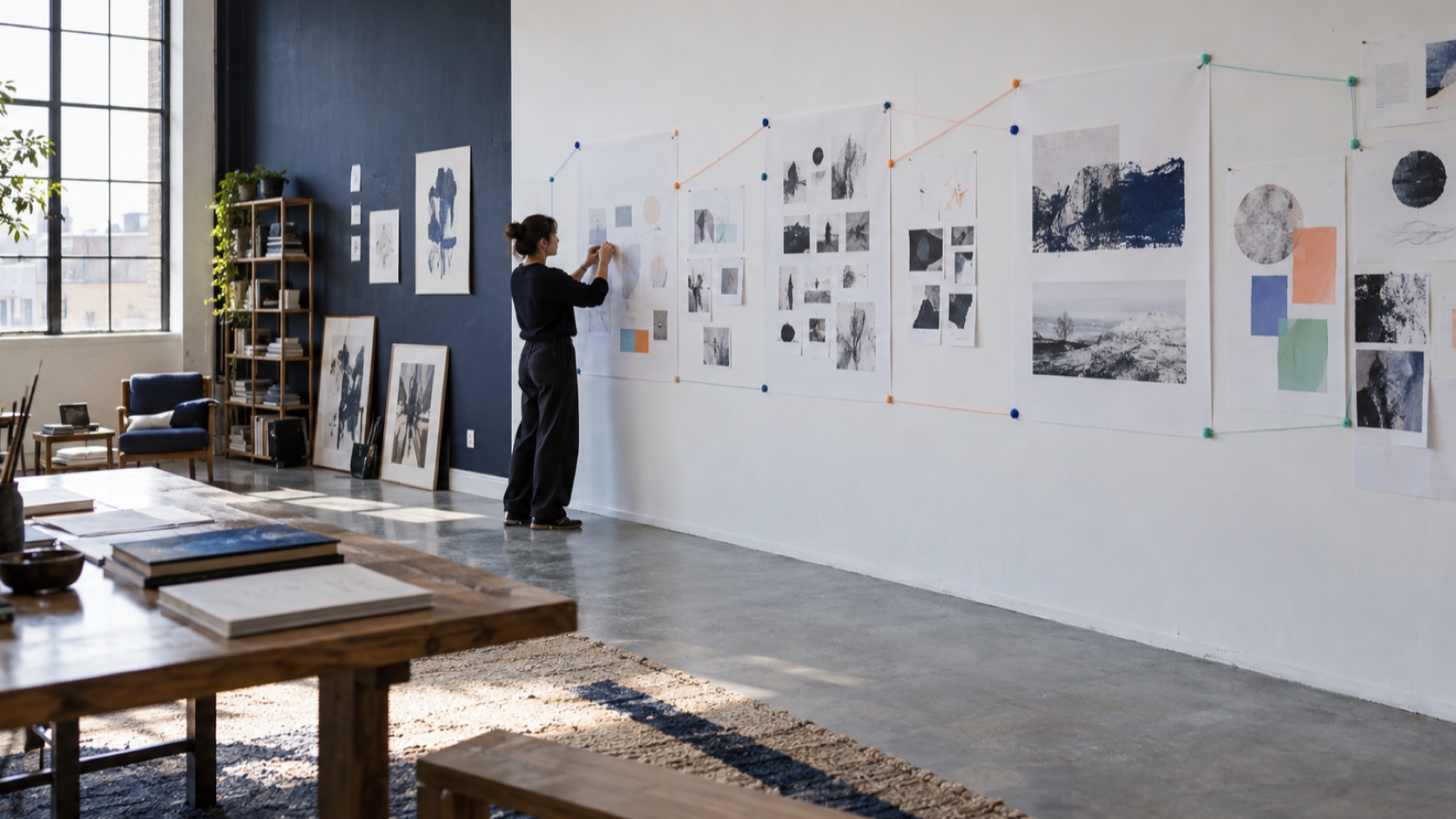
Build an AI-assisted portfolio case study around a real project question: explain the brief, show the decision path and evidence, identify the tool’s bounded role, and state what you would change next time.
Choose a project with a visible decision
A portfolio case study is not a gallery caption with more words. Its job is to let a reviewer understand how you approached a real constraint. Choose work where you can explain a decision: a campaign needed clearer approval steps, a tutorial needed a usable illustration system, or a research summary needed a better reader path. AI assistance can be part of that story, but it is not automatically the story. Start with the original brief, the audience, the success condition, and the limits you faced. If the work was exploratory, say so. If it was a personal exercise, do not present it as a client launch. Clear scope makes the later result more credible.
0Collect a small evidence set
Gather the source brief, a few early options, feedback that changed the direction, the selected deliverable, and any approval or measurement you are permitted to show. Keep only artifacts that reveal a choice. Ten nearly identical generations show activity, not judgment. One initial visual brief, three deliberately different candidates, a marked selection note, and the final crop can explain a real process. Remove confidential material and obtain permission before using client names, screens, quotations, or performance data. If you cannot share an artifact, describe the constraint precisely rather than inventing a substitute.
0Use a six-part case-study structure
Open with the reader problem and your role. Then state the brief and constraints, followed by the evidence you used. Show the decision path: what you tried, what failed, what changed, and why the selected approach fit. Explain AI’s bounded role in concrete language, such as producing early composition alternatives from your approved visual brief or helping organize supplied research notes. Finish with the delivered result, what feedback or evidence supports, and one honest lesson. This sequence prevents the common pattern where a polished final image appears before anyone knows what it was meant to solve.
0Example: a tutorial header with an AI-assisted exploration
A creator needed a header for a tutorial about reviewing AI-generated meeting notes. The brief required a calm editorial image, space for a headline, and no fictional product interface. You wrote the visual brief, generated three overhead still-life directions, tested each in the real crop, and selected the one where a marked checklist remained visible at mobile size. A fourth version was rejected because its invented dashboard could be mistaken for the product discussed in the article. In the case study, show the brief, the crop comparison, the selection note, and the final asset. Say that the generator explored compositions; do not say it designed the editorial system or proved usability.
0Run a claim and authorship check before publishing
Use this checklist: name your role and collaborators; label work that is conceptual, internal, or unreleased; distinguish source material from generated illustration; link only to public work you may share; remove claims that lack a documented result; and explain any AI output in terms of the task it supported. Avoid “increased engagement” unless you can state the context, period, and permitted evidence. Avoid a fake client testimonial, invented user quote, or reconstructed before-and-after metric. A portfolio reviewer is usually more interested in how you handled uncertainty than in a claim that cannot be inspected.
0End with a decision a reviewer can follow
Close with the trade-off. Perhaps you learned that a broader visual style prompt weakened the tutorial’s meaning, so you moved layout constraints into the brief. Perhaps a research tool surfaced links quickly but required a human fact check before the copy could be used. State what you would repeat and what you would change. The executable conclusion is simple: make the next case study from the record you keep while working—brief, evidence, decisions, approvals, and lessons—rather than reconstructing a heroic story after the fact. That record makes your judgment visible without overstating the tool or the outcome.
0Work through a complete case-study edit
Use a concrete project record to make the case study credible. Imagine you created an editorial landing-page concept for a workshop about reviewing AI-assisted writing. The original brief says the visitor must understand the workshop is about human review, not automated publishing; the page needs a calm header image, a short schedule, and a clear registration action. Your role was content and visual direction. The constraint was that no client, attendance, conversion, or product performance result could be claimed. Start the case study with those facts. They establish the project without borrowing status from an invented launch. Next, show the working sequence. First, you made a page outline with the reader question, required facts, and a list of claims requiring approval. Second, you made a visual brief that asked for a paper review checklist and quiet headline space, while excluding fictional dashboards and readable product text. Third, you generated three composition routes, placed them into a rough layout, and selected the one that preserved the checklist at mobile crop. Fourth, you wrote the page copy from the approved workshop facts and ran a claim check on the schedule, price, and call to action. The case-study evidence can be a brief excerpt, three labelled roughs, a crop comparison, the final annotated mockup, and a short rationale. Do not claim that every iteration was a discovery; show only the decision that changed the result. A reviewer should be able to follow the evidence table: Brief requirement: readers must see human review as central. Decision: use a visible checklist rather than an abstract robot image. Evidence: header crop and marked brief. Constraint: no real product UI. Decision: reject the candidate containing a fabricated dashboard. Evidence: rejected rough and note. Accessibility requirement: decorative art must not carry the essential message. Decision: repeat the workshop purpose in the heading and provide suitable alt text. Evidence: final copy and image description. This table makes your competence inspectable because it connects an action to a reason. Then write a candid failure note. The first visual route might have looked polished but left no usable title space; the fix was to change composition, not add a longer prompt. The first copy draft might have implied that review guarantees accuracy; the fix was to state that review is an accountable step, not a promise of an outcome. End with a result statement that stays inside evidence: “Delivered a documented concept package that explains the workshop and preserves the approved message across desktop and mobile mockups.” Add what you would test next if authorized, such as comprehension with representative readers. That is stronger than pretending the concept already has user data. The reusable conclusion is to capture choices as they happen, identify the tool role honestly, and make the portfolio page a clear account of responsible work rather than a retrospective success story.
0Keep the record useful
Before publishing, ask a reviewer to identify the project goal, your role, one rejected option, and the evidence behind the final decision without reading your process notes. If they cannot, improve the structure rather than adding praise. Save permission status and sources with the case study so future updates remain accurate.
0Sources and update note
Follow the linked official source before a product, price, plan, or policy decision.