
Guide
AI Chatbots for Work: A Buyer’s Guide for Teams That Need Reliable Answers
Buy for the answers your team can verify, the controls you can administer, and the workflow you can sustain.
Read the guide →Decision desk
Evidence-aware tool choices for real creative and team work.
Guide
Buy for the answers your team can verify, the controls you can administer, and the workflow you can sustain.
Read the guide →
Guide
Choose by the work you must deliver—rights, control, iteration, and review—not by a single impressive sample.
Read the guide →
Guide
Choose an AI note-taking app by testing consent, capture, accuracy, action extraction, export, and integration against one real meeting workflow—not by trusting a feature list.
Read the guide →
Guide
Evaluate AI research tools by tracing answers to accessible sources, checking citations and uncertainty, and testing whether the tool knows when the evidence is missing.
Read the guide →
Guide
Review AI SEO tools as a site owner: inspect the data source, match keyword intent to a real page, validate on-page output, protect data, and recheck plan terms before paying.
Read the guide →
Guide
Choose AI video tools by running a real edit through workflow fit, control, consistency, rights, export, and cost-model checks—not by judging a polished demo clip.
Read the guide →
Guide
Review workflow automation tools by tracing a trigger through data, approvals, logs, retries, and exit options before it can change real work.
Read the guide →
Guide
Choose an AI writing tool by testing its source handling, outline-to-edit workflow, voice control, CMS handoff, privacy boundary, and current subscription terms for one real post.
Read the guide →
Guide
Choose an AI deployment path from the real workload, data boundary, support burden, and evidence—not from a simple privacy-versus-power slogan.
Read the guide →
Guide
Compare document tools on the fields, layouts, exceptions, and review costs your workflow actually contains.
Read the guide →
Guide
Run a short data-path review before a useful demo turns confidential work into an unapproved experiment.
Read the guide →
Guide
Use ordinary, difficult, and stop-worthy examples to learn whether a tool helps a real task before trusting an average score.
Read the guide →
Guide
Use one real workflow, representative examples, and a clear stop rule to learn more than a polished vendor demo can show.
Read the guide →
Guide
Count the time spent checking, correcting, and escalating AI output before deciding whether a tool actually saves work.
Read the guide →
Guide
Use a small, frozen set of real tasks to see whether a model change improves work without breaking accepted behavior.
Read the guide →
Guide
Check whether answers solve the same task across languages instead of merely translating a fluent English response.
Read the guide →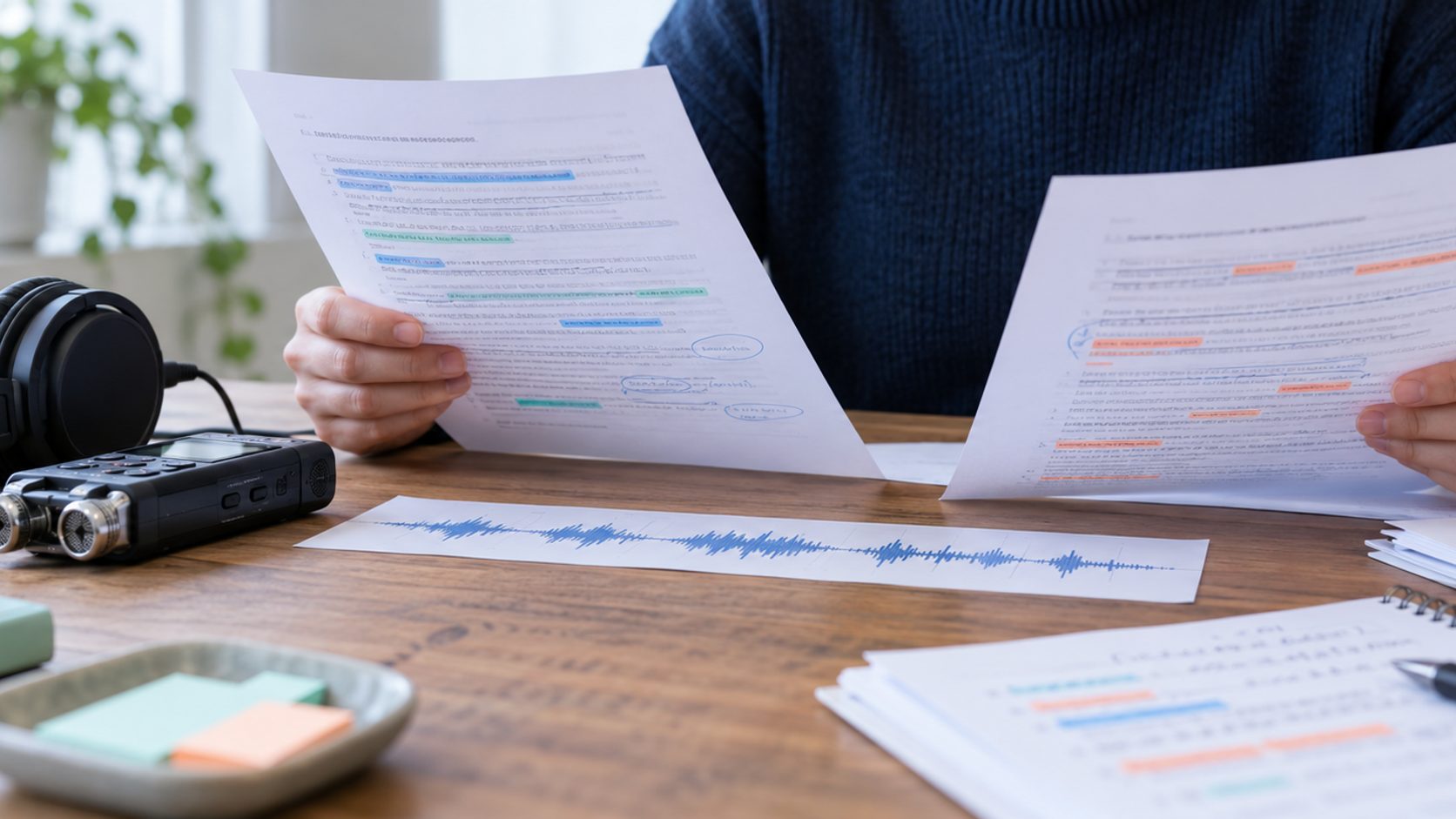
Guide
A short, representative recording set reveals more than a polished product demo.
Read the guide →
Guide
Test citations, tables, revisions, and uncertainty with your own documents before trusting a polished answer.
Read the guide →
Guide
Use one bounded bug fix and its tests to see whether an assistant helps a team understand, change, and verify code.
Read the guide →
Guide
Test what your team can retrieve, transfer, and keep working on if a tool no longer fits.
Read the guide →
Guide
Test the parts of a meeting transcript that people are most likely to act on.
Read the guide →
Guide
A short summary is useful only when it preserves the conditions the source makes important.
Read the guide →How this desk works
One real brief, plan-specific documentation, and a permitted “cannot verify” outcome make comparisons useful.