AI for Creators · A guide
The Practical Fact-Checking Workflow for AI-Assisted Articles
Use AI to organize claims and gaps, then let traceable sources and accountable editors decide what remains.
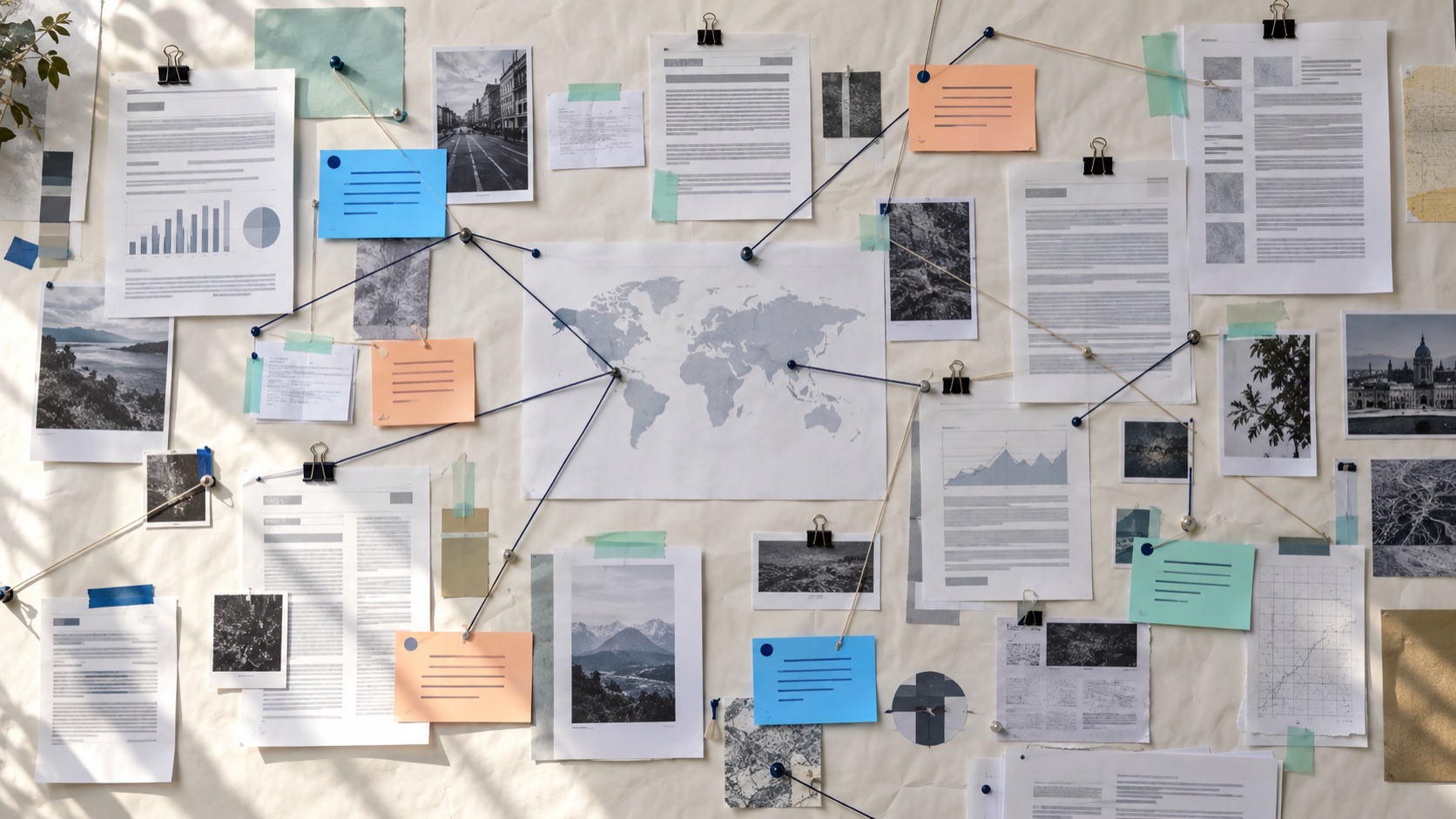
Fact-check AI-assisted writing by building a claim ledger before publication: isolate each checkable statement, match it to the right source, preserve scope and date, and revise the prose when evidence is missing.
Fact checking starts before the draft sounds finished
AI can turn notes into fluent prose so quickly that an unsupported statement may feel settled before anyone notices it. Resist that sequence. Start with the reader decision and list the factual statements the article would need to earn: a product capability, a date, a number, a quotation, a policy, a comparison, or a causal claim. Separate those statements from your recommendations. “The documentation describes an export option” is a checkable statement; “that option may suit a small team after testing the handoff” is a judgment. Both can belong in an article, but they need different labels and different review. A clear list prevents the common failure where an attractive summary gives an inference the authority of a source.
0Make a claim ledger small enough to use
A spreadsheet is optional; a table in the working document is enough. Give each claim a row with the proposed wording, source URL, source type, relevant excerpt, publication or check date, owner, and status. Use primary material for claims about a vendor, regulator, standard, or organization whenever it is available. Secondary reporting can add context, but it should not silently replace the original document. A ledger also forces useful precision. Instead of “the tool protects data,” write the particular policy statement, account setting, or unresolved question. If you cannot read the page that supposedly supports a sentence, mark the sentence unresolved rather than treating a search snippet as evidence.
0Match the source to the kind of claim
Different claims have different homes. Current product behavior belongs in official documentation or release notes; a rule belongs in the relevant authority’s text; a research result belongs in the original study; a direct quotation belongs in its full context. Consider a draft that says, “Creators can use automatic captions to make every video accessible.” The fact checker should split it apart: a platform may offer an automatic-caption feature, but availability does not establish that every result is accurate or accessible. The revised article can say that automated captions are a draft requiring review for names, timing, sound cues, and meaning. The revision is more useful because it preserves the condition the original shortcut erased.
0Run the source-to-sentence check
Open the source and compare it with the exact sentence, not with your memory of the source. Check scope: does the documentation apply to this plan, country, account type, or date? Check verbs: does it say “may,” “supports,” “preview,” or “requires configuration,” while the draft says “will” or “includes”? Check definitions: does a benchmark measure the same workload the article describes? Then check context for quotations and statistics. A true sentence can still mislead when it leaves out the limitation that gives it meaning. This pass is where AI is helpful as an assistant: it can identify similar wording, surface a list of claims, or compare supplied excerpts. It should not certify a source you have not read.
0Example: repair a confident but weak paragraph
Suppose a draft says, “AI research tools deliver reliable answers from the web, saving teams hours.” The ledger exposes three unsupported claims: reliability, web coverage, and time saved. A better version might say, “Some research tools can help organize search terms, summarize material you provide, or surface links for review. Treat their output as a starting point; verify the source, date, and scope before using it in a decision.” The new wording is not less helpful. It tells the reader what to do today and does not borrow authority from a vague promise. If you have an actual, documented internal measurement, describe its method and limits; otherwise do not manufacture a number to make the conclusion feel complete.
0Use failure codes rather than vague editorial anxiety
When a claim fails, record why: no source found, source does not support wording, source is out of date, source has a scope mismatch, quotation lacks context, or judgment is presented as fact. These labels make revision faster. “Out of date” directs the writer to current material; “scope mismatch” directs them to narrow the sentence; “judgment presented as fact” directs them to show the reasoning. Do not fix a failure by adding a decorative hedge to an otherwise false statement. If the article cannot support the point, remove it or write the remaining question plainly. This is a stronger editorial choice than preserving every paragraph the generator produced.
0Finish with an editorial handoff
Before publishing, review the ledger against the final layout. Check headings, captions, pull quotes, links, image descriptions, and calls to action; claims often reappear in these elements after the body has been checked. Save the source set and check date with the approved version, especially for facts likely to change. The handoff should state what was verified, what is an interpretation, and what needs later review. It should not claim that a workflow eliminates mistakes. A practical workflow makes the origin of a statement visible enough for the next editor to question it. That is the standard worth keeping when AI makes a first draft effortless.
0Work a claim ledger through one article
Take a draft about a note-taking assistant and make five ledger rows before editing prose. Row one: “The service exports notes as PDF.” Attach the official help page, quote the relevant sentence, and record the account type and date checked. Row two: “The export works for every workspace.” If the source only describes a particular plan or a beta feature, change the wording or mark it unresolved. Row three: “A survey found teams saved time.” Locate the original survey, identify who was surveyed, what “saved time” measured, and whether the study was vendor-sponsored. Row four: a quotation from a user. Find the original recording or written approval and retain enough surrounding speech to preserve the point. Row five: “This is the best choice for small teams.” Label it as a recommendation and state the criteria behind it rather than pretending it is a source fact. The same ledger makes version checking practical. Product pages may change after a writer reads them. Save a check date and, where it matters, the version or release-note date. If a document says a feature is available in preview, do not publish “includes” without that condition. For a number, check units, rounding, baseline, sample, and time period. A 20 percent reduction in one measured step is not a 20 percent improvement in a whole workflow. For a quotation, check speaker, attribution, punctuation that changes emphasis, and whether a question or qualification has been removed. These checks are unglamorous, but they are exactly where an AI-generated draft can turn a plausible fragment into an overconfident conclusion.
0Use a publication audit that follows the reader path
The final audit begins at the title, not the last paragraph. List every factual promise in the headline, dek, headings, body, captions, illustration labels, pull quotes, metadata, and calls to action. A reader may only see one of those surfaces, so a checked body does not excuse an exaggerated social card. Open each outbound link and make sure its label describes the destination. Check whether the article distinguishes a demonstration, a vendor statement, independent evidence, and the publication’s judgment. Then ask a final reader question: if this sentence were wrong, what decision could it distort? Prioritize those claims for a second human read. When evidence remains incomplete, choose a visible editorial outcome: defer the section, narrow the claim, state the uncertainty, or send the question to the accountable specialist. Do not conceal uncertainty with “may” when the underlying assertion has no basis. The goal is not a ceremonial accuracy badge. It is a publishable article whose important statements have a source trail, whose interpretations are recognizably interpretations, and whose later correction can begin from the evidence rather than from a chat transcript.
0Walk a draft from first claim to published audit trail
Imagine an editor receives a 1,100-word draft called “Can AI Meeting Notes Reduce Follow-Up Work?” The first move is not to rewrite the opening. Make a working copy and assign it a draft ID, such as MN-014. Read once with a highlighter and label each statement as one of four things: a checkable fact, a quotation, an interpretation, or a recommendation. “The tool creates action items” is a product claim. “Our team stopped losing decisions” is a quotation or case claim. “This setup is useful for weekly project meetings” is an interpretation. “Start with the free plan” is a recommendation. The labels make the next action clear: facts need sources, quotations need their original context and permission, and editorial judgments need stated criteria rather than a disguised citation. Build a compact audit sheet beside the draft. For the product claim, record the official documentation URL, the exact feature name, the plan or account conditions, the page access date, and the exact wording supported. If the page says action items are available only after a feature is enabled, revise the sentence to retain that condition. For the team quotation, open the interview recording or approved transcript, note the timestamp, confirm the person’s role and preferred attribution, and read the preceding and following answer. If the speaker also said that people still reviewed every summary, include that qualification where leaving it out would change the lesson. For the interpretation, add a short editor note: it is based on a small team’s workflow, not a general performance result. For the recommendation, name the reader situation and the trade-off: a solo consultant may value a low-cost trial, while a regulated team needs to check its own retention requirements. Now perform a second pass through every reader-facing surface. The headline, dek, pull quote, image caption, summary card, and newsletter teaser often compress the article more aggressively than the body. In this example, “Reduce Follow-Up Work” might become “Help Teams Find Decisions After a Meeting” if the available evidence supports retrieval but not a measured reduction. Check link labels against their destinations, verify that screenshots match the feature and plan described, and ensure an illustrative image is not being read as a real product result. Put a status on each ledger row: verified, narrowed, attributed, deferred, or removed. A row marked deferred is not a failure; it is a clear signal not to publish that sentence yet. Before scheduling, ask a colleague to audit a small risk-based sample without using the writer’s notes first: the lead claim, the strongest number, the most persuasive quotation, and every sentence that tells a reader what to choose. They should be able to reach the cited source, see the relevant condition, and distinguish the article’s judgment from the source’s wording. Record any correction against MN-014, including the changed sentence and why it changed. At publication, retain the final URL, source list, audit sheet, image approvals, and correction contact in the same editorial folder. If a source later changes or a reader flags an error, the team can trace the published claim back to a specific decision instead of reconstructing it from memory. That is the practical difference between an AI-assisted draft that merely sounds researched and an article with a usable publication record.
0Sources and update note
Follow the linked official source before a product, price, plan, or policy decision.